Snail Trails

Snail Trails
Roaming S-Car-Goes!

Wednesday, September 2, 2009

A Brief History Lesson 101


"At their marriage they headed westward as did all adventurous spirits and homeseekers of that time. They crossed the northern part of Missouri with ox team and covered wagon."


-my great grandfather Benjamin Mears speaking of his parents, Harrison Cheaton Mears and Mary Cathern Price. From his memoir My Oklahoma.


SETTING OUT Dave and I chose a route most conducive to our destinations, it just happens a good portion of that planning followed a course that had been used for almost 200 years. Sure towns have popped up and asphalt laid, but as we drive through valleys, over mountains, and along side rivers, it occurs to me how much this part of the country hasn't changed. The West has always been rugged and raw, ranches and homesteads, wide expanses both above and below. It is Absolutely Beautiful!
The route we used was discovered in 1812 by a team of furriers returning East from Astoria, Oregon. Sadly war broke out that same year and all thoughts of travel along the Snake, Bear & Green Rivers, via South Pass to the Platte River was forgotten. Twenty years later a young captain in the US Army took a leave of absence from his frontier post, of plains and Indian country, to explore the western outback. Captain Benjamin Bonneville, you may recognize the last name... hint: it's a dam in Oregon, believed the Continental Divide coub be safely crossed using wagons to reach the Columbia River. Following a similar route as the fur traders, only in reverse, Bonneville successfully reached the Columbia River with wagons in toe opening up new possibilities for adventurers and settlers. Familiar with this region out of work fur trappers and mountain men now hired themselves out as trail guides, escorting emigrants West as early as 1836. Men such as Kit Carson and Jim Bridger.
At first only a few families chanced the crossing, but by the mid 1840's the "Great Migration" was on as thousands of steadfast missionaries, settlers, gold hounds, and explorers followed their dreams West into Oregon, California, and Utah. It wasn't until the completion of the Transcontinental Railroad, in 1896, that transportation West changed. The wagon trains slowed to a trickle as more travelers favored the "Iron Horse" to convey them to their western destinations.

BOTH US30 and Interstate 80 are descendants of the dusty Oregon-California Trail, often laying directly on or near the original wagon ruts. Passing the "Point of No Return" Dave and I rolled into Soda Springs Idaho elated the repairs on Gutless Wonder had held. Soda Springs had been part of a shortcut off the main route to Fort Hall, now located a little ways out of Pocetello Idaho. The springs were something of a phenomenon to the emigrants having never seen geysers, gushing water over 150 feet in the air or bubbling pools of effervescent water popping CO2. It was said that travelers added sugar to the water making frontier soda pop. The only "frontier soda" Dave and I picked up was the kind we found at the local grocery store when we stopped for supper supplies.

Idaho's historic byways are clearly marked on their state road map. Little dotted lines, broken by X's and O's and the occasional dash indicate the variety of routes taken through what was once considered Oregon Territory. Despite our earlier setbacks I was excited we'd chosen to follow the Bear River Valley route eastward. Running between Soda Springs and the Wyoming border everything about this area is seeped in history, from the roadside "points of interest" to ranches, farms and small communities that freckle this underpopulated country representing the true rural West of America.

It is easy to imaagine ourselves as young settlers, a farm wagon loaded with our small cache of belongings plodding along the well worn dusty trail. To the right Bear River sparkling and welcoming in the afternoon sun, surrounded by Quaking Aspen and vinilla scented Ponderosa Pine. All around open fields lush with wild grasses of Blue, Indian, and Rye dance in the soft summer breeze, while Monkshood, Columbine, and Larkspur dot the hillsides. Yellow spears of Verbascum thapsus, mixed with pinks and blues of Epilabium angutifolium, and Linm usitatissimum (Mullen, Fireweed and Flax) become roadside indicators, marking the passage of wooden wheels and later well traveled byways. To be a bird looking down across the mountains onto the patch-worked land would be a glorious thing. once again I reflected why emigrants continued West. Everything they needed was here, fresh water, grazing land, and timber. By this time these travelers had already walked over 1000 miles, why not stop? Would we given the choice?


CROSSING THE valley was easy for Gutless, we left the steep climb behind us and now the road had become relatively level. It is along this tributary that Dave and I discover Clover Creek, outside Georgetown. Here travelers watered themselves and their cattle, gathered plants for both healing and seasoning and rested their tired bones. For us we just pulled a cold a cold water bottle from the cooler and continued along our way. It is not far from Clover Creek that we pass a wooden plaque with "Smith Trading Post" carved into its header. Established in 1848 by former mountain man Thomas L. "Pegleg" Smith the historical marker points to the area where the short lived rustic outpost possibly stood. Built beside the river shaded by Cottonwoods, Alders, and Willows this would have been prime real estate for an ambitious business man. Drawing closer to the Wyoming border the grade begins to increase and the river pulls away from the highway. Dave points out a huge prominent hill seen silhouetted against a broad blue of sky. It is later we learn this ridge was a wagon's nightmare. Big Hill was journaled to be one of the steepest and longest hurdles the slow moving oxen had encountered after leaving Missouri.

Sometime after 3:30 pm we crossed into Wyoming, finally out of Idaho and closer to Colorado. The more I read and experience the westward movement I realize the motivation and spirit of the adventure still drives the passion to be off exploring and discovering today. The early settlers wanted a better life for themselves and their families, to begin fresh in new territories where opportunities were for the taking and not for the faint of heart. These were people willing to weigh their faith, determination and hard work against countless dangers, uncertainties and even their lives. I am proud to have their blood run through my veins.

Wishing you all well
D & V and Sackett too.

Wednesday, August 19, 2009

GET ME OUT OF IDAHO!


Do you remember the story of the Little Engine That Could? The circus had to get over the mountain and their transportation had broken down. All the engines strong enough to do the job refused to help, and then came along a little blue engine...


We headed South leaving Pocatello behind us. We'd had a crappy breakfast at Denny's and were looking forward to Wyoming and Colorado. To continue South into Salt Lake City would mean testing "Gutless" at elevations we weren't sure she could handle.

Instead we cut East along US 30, continuing to follow the Oregon Trail, this time to Soda Springs. This route of the OT was one of the busiest during the frontier days, used by trappers exploring the mountains and valleys for furs, pioneers heading West towards the Snake River and Mormon settlers looking to establish farming communities. This stretch of road, between Lava Springs and Montpelier, is designated a scenic byway and justly so, mountain meadows dotted with yellows, blues and reds bunched beside clear streams filled with fish, evident by the fly fishermen along the banks. Outside lava Springs billboards advertise the new waterpark. Its colorful tubes and platforms echo the giggles and screams of young fun as we pass by. Other signs remind us of the historical significance of the hot springs found throughout the area.


Not far out of Lava Springs we begin the ascent, slowly climbing, aware of the thermostat gauge. Our speed slows to 30 mph...25 mph...20 mph. The engine's temperature increasing a little each time. At mile marker 19 the thermostat reading shoots into the red zone! Dave pulls over as we watch a semi-hauler creep pass. We process our options, verbalizing alternatives to heading back. In the end our best solution is to return to Pocetello and do the repairs. From a local petrol station, allowing Gutless to cool down, Dave orders a new clutch fan and thermostat from Checkers, who assures us the parts would be in the next day by 10a.

What a way for Dave to spend his birthday, a bad breakfast, a blown thermostat, and another night in Pocettello Idaho. However, all was not lost! Retrieving the Red Lobster gift card from its hidy-hole (thanks to John back in Bend) I informed Davey we'd be eating out, so get showered and put on a good shirt!
What a wonderful way to end the day. A romantic quiet meal out, I had the trout and he had the lobster, then home curled up with the cat, together on the bed watching a movie. Outside the rain fell and the lightening lit up the sky. Tomorrow would be a new day with new challenges and new surprises. Besides isn't this what life is all about, tackling the hurdles and embracing the achievments together?


We awoke with overcast skies, but no rain, and a promise of sunshine. The parts we needed came in earlier than expected and so Dave rode his bicycle the mile to the shop to pick them up. With his head under the hood Dave methodically tore down the area he was working in and then carefully put it back together. As he was nearing the end of the process I heard some strange #%*& coming from the front of the truck.


"I didn't get a replacement casket, Honey will you go back and pick one up for me?"

Dave called a head to Checkers to make sure they had one. I then ran/walked/ran to the part shop. The woman there couldn't find where they had been moved the caskets, then she couldn't find the right casket, and when she did find them she had to double check the type number with the other fellow there. They were kind enough to not charge me, but after all that and running back to the truck it turned out NOT to be the correct casket after all. Dave was not a happy camper. He put the part he was working with in his backpack, got on his bicycle and rode back to Checkers. I got a call to tell me that they never had that part to begin with and when he finally got back to the truck almost 2 hours had past. He had had to ride to the other end of town. With the part in hand it did not take him long to get the rest of the project together.

We got the trailer hooked back up, filled the fuel tanks and headed out, following the way we had started the day before. We started up the infamous hill, everything appeared to be okay. The thermostate gauge was registering normal...traveling at a steady 35 mph we got closer to the original turn-around point. Fingers crossed we dropped to 25 mph, still going good... We reached the 19 mile marker, no indications of a problem.

Now do you remember the Little Engine that Could? All the way up that mountain the little blue engine kept saying "I think I can, I think I can, I think I can..." and so we were saying the same thing only Gutless was saying with us "I know I can, I know I can, I know I can..." and sure enough we made it to the top and rolled easily into Soda Springs without anymore problems.


"We thought we could, we thought we could, we thought we could..."

Love to you all,
D&V, and Sackett too

Monday, August 17, 2009

1,2,3,4... part 2


"And now Harry let us step out into the night and pursue that flighty temptress adventure."

- Prof. Albus Dumbledore


Pretty country with pockets of willows, sage, and pine... Eastern Oregon is much greener than anticipated or remembered. I wonder why more settlers didn't stay? Dave reminds me that they had greater dreams in mind, which meant greater risks and further distances to travel. Dreams are important and although some level of risk is involved with everything we do, it is with faith that we are able to set the process in motion. You can't really have one without the other; all three- dreams, risk, and faith, are essential elements for adventuring.


Nineteen miles out of Pendleton we stop at Deadman's Pass. Banana's, juice, and donuts constitute our breakfast break, allowing "Gutless Wonder" a well deserved rest. We have entered the Blue Mountains, steep and exciting, a landscape that strikes fear into the hearts of many travelers. "Their lofty peaks seemed a resting place for clouds", one emigrant noted in their personal journal. It is here that the settlers looked towards the west believing the next big obstacle would be the Cascade Range. Sadly this would not be the case as the arid desert of eastern and central Oregon awaited them.

Traveling the Oregon Trail backward we reach Baker City, leaving the Far Blue Mountains behind us...
In 1861 gold was discovered just sw of Baker City, altering the migration pattern of the eastern emigrant, Pioneericus oregonidae. Eastern Oregon now became the new destination of choice. With plenty of water, grassland, and now gold many pioneers, who had earlier passed through on their way to the Willamette Valley, retraced their wagon ruts and returned to the Powder River Valley. New emigrants seeing the rich fertile land for the first time stopped no longer wishing to continue further West. As we passed through Burnt Water Valley on our way to Idaho territory we looked for the legendary landmark, "The Lone Pine Stump", once a large singular tall pine that stood in the midst of an immense plain. This landmark symbolized an unending determination for trappers, Indians, missionaries and settlers, and their ability to survive against unsurmountable odds. In 1843 this sentinel of the eastern plain was chopped down.

We crossed into idaho without much incident. My first impressions of this state imprinted on my mind from an earlier trip almost thirty years ago. I still remember the brown crusty Christmas tree on top of a single wide trailer, large multicolored lights adorning dead branches in the middle of Summer. And the woman in a luncheon cafe, nonchalantly picking her nose, rolling the contents into a ball and then dropping it in her coffee, which she proceeded to drink with sweetener. I was hoping this latest visit would dispel past memories.

Southern Idaho is flat, flat, flat and deathly dry. Between the discovery of gold, silver and thw Carey Act of 1894 Idaho became populated. With the establishment of dams all along the Snake River the desert land was reclaimed for agriculture and now produces one-third of the nations potatoes, peas, and onions. Driving with the windows down my olfactory is filled with the hint of fresh mint and moist soil. Two hundred plus miles of Harry Potter passed the morning away. Not far out of Mountain Home (no mountains in sight) we heard a familiar BANG! Same side different tire tread. Potter goes off, Jones jumps out "destined to be dirty". Les Schawb here we come! Now I must say this may seem an inconvenience, however it turned out to be a real blessing. Apparently our rig was getting tired of the mundane flatness and needed a change of scenery. Leaving the interstate behind, we found ourselves driving towards Buhl, a small town on US30, and as it turns out the most beautiful country in southern Idaho.

Hagerman Valley, an oasis stretching along the Snake River, is known for its thousand springs. Channels of under ground rivers cascade off cliffsides forming frothing waterfalls, hot springs and lush landscapes. Journeying down one hillside a sign indicates dinosaur digging and fossil excavation. LAND OF THE LOST is all I can think about. Having replaced two tires on the road Dave decided to place this third spare on the trailer, using one of the original remaing tires as backup. One of the great things we have been doing as we drive, when not listening to HP, is learning about the areas we pass through. Using Lonely Planet as our guide I read the history and fascinating facts aloud. In this way the places we drive through come to life and is more than just a name on a milage marker. Thus we find ourselves eating a picnic lunch, while overlooking Shoshone Falls. Not eager to return to the hot asphalt of I-84 Dave made an executive decision to hang out until late afternnon when it'd be cooler to drive. We plugged the point of interest into the navigational system and away we went.

Oh My Gosh, we are so glad we stopped!!! Like something out of a Tarzan movie this 212 foot waterfall was magnificent. Saving the $3 we hiked down, down, down to the picnic lookout and laid on the green velvety grass, Dave napping and I sketching. It's amazing to think this is part of the Snake River. Historical kiosks tell the story of this once impressive fall that due to damming and irrigation is reduced to a mere essence of its former self, although still very awesome. After a long rest and ready to get back on the road we made our way to the trailer.Upon reaching the the parking lot Dave exclaims, "Oh S--- where are the Keys?" Leaving me at the truck he ran all the way back down, frantic to find our means out of here. Minutes passed and I get a call,
"I can't find them, I checked where I was laying last but only found some quarters!"
"What about where you were calling Mark?"
"Where was that?"
And like a reward challenge on a reality show for couples I had to direct Dave back to the first spot we had been, without any visual references. "Found them!", came a relieved reply.

That evening, in Pocatello, we slept under the infamous halogen lights. I reflected on the past 800 miles wondering what the next leg of the journey would hold for us. Sackett curled at my feet, Dave snoring at my side. Adventuring sure can be rough.


Wonder Woman welcomes you to Shoshone Falls!


Thinking of you all fondly- D&V


Please forgive the long stretches in between postings, we are not always in internet friendly territory.

Friday, July 24, 2009

1,2,3,4...


ONE wild ride for TWO crazy wandering adventurers, who managed to change THREE tires during FOUR half-baked days of travel.


On a sunny Friday morning, after checking out the local Russian Orthodox Church's yard sale, Dave and I pulled out of Port Townsend. On our left the Hoods Canal, a branch of the Puget Sound, sparkled in the early days sunshine. Ahead of us highway 101 paved the path to the South. If you ever have a chance to spend time on this road there is a reason it is designated a scenic byway. We passed large spans of estuary scanning the flats for Great Blue Herons, wound round romantic inlets and coves harboring small sailing boats and fishing skiffs and crossed an occasional river destined for the Sound. As we "trolled" over the Dosewallips River we were presented with a magnificent vision, a large Roosevelt Bull Elk was taking his breakfast surrounded by his harem of ladies. Neither cows nor bull was bothered that the road was no more than twenty feet away, as they slowly made their way along the river heading for higher ground in the Dosewallips State Park. Roosevelt Elk (for those who don't know) were named for Teddy Roosevelt. Our 26th president created the Olympic National Monument, now the Olympic National Forest, in an attempt to preserve the habitat of these native herds. What a great way to begin this trip!!

But the unexpected comes in all forms...

"Gutless Wonder", as we affectionally call our Ford, was driving smoothly making excellent time on the wavy road to Olympia. With the coordinates for our next destination programed into the new GPS I watched Olympia come and go, then Tumwater passed without incident. "That's tire rubber", I thought as we rambled along the Interstate. A car passed us by with a little boy in the front seat starring at us, his eyes as wide as saucers. "Honey, I saw rubber fly did we pop a tire?"
Sure enough one of the trailer's tires had shed its tread. While Dave was getting us up and rolling I searched for the closest Les Schwab on our handy dandy global positioning system. In no time the static female voice was issuing directions towards a new spare tire and lunch in Chehalis. It's just a shame the unsettling new technology we've incorporated into the truck couldn't come with the voice of Majel Barrett Roddenberry.

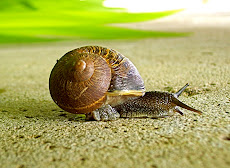
Our new helpful navigational system has no idea we are pulling our home along with us, so when I programmed in MULTNOMAH FALLS, for a letterboxing detour, instead of directing us to the oversize parking off I-84 (which I later learned was available) she kindly took us off the interstate and along the old historical gorge road - gorgeous, romantic, but narrow to very narrow, especially over a few bridges. As we approached the Falls we quickly discovered there was no parking for our giant snail. Stopping was not an option, we had to continue moving forward. A large sigh of relief passed across Dave's lips as we reached the entrance to the freeway. Lesson Learned: Not all routes chosen by little black box are appropriate for large vehicles. Stay off thin grey lines found on physical map.
"Well it was a pretty detour", observed Viewing Vanessa
"Yah, pretty scary", replied Driver Dave

With misfortune behind us we pointed the rig into the wind and headed for Pendleton. The flat of the gorge however was misleading and instead of making up for time lost we tacked on more hours and ate up more fuel. The Columbia River Gorge is in actuality a long gradual up hill climb that never really ends. The voice from the dash directed us to our evening abode. To unwind I read, Dave watched a movie and Sackett snaked out from under the covers to join us for dinner. With the fan blowing on low we fell asleep under the city stars. Now it really feels like we are on our way.

Good Night Dave,
Good Night Sackett,
Good Night Moon.
The moonbeams shine through the window resting their star light on our quilt...But wait! That's no moon, that's the halogen lighting of the Wal-Mart parking lot!
To Be Continued...

photo is of my grandparents Bill & Winnifred Pow (1920's)


Wednesday, July 8, 2009

Birth Days...


Picking peas my hands mingle in the tangles of tendrils sprawled across hanging fishing nets. I seek out the slim green crescent pods, some the length of my middle finger, sometimes longer sometimes shorter. While picking I spy the fairies of the pea patch. Their tiny wings fluttering like those of hummingbirds stationed at a feeder, their heads crowned with the purplish blue hues of the flowering pea, giggling among the rounded leaves hiding my harvest from me. Behind me the Reds cluck and churkle as they scratch the ground for groceries. In the morning there will be an egg or two for breakfast.

Dave is in Blaine Washington working on the new Peace Arch, between the Canadian/US border. This is his second week up there- tarring, roofing, building through the sun and rain. I have stayed behind in Port Townsend catching up with friends I would not have been able to see except for Dave's exodus. His work is an unexpected blessing for both our friends and our coffers.

It is hard to believe we have only been traveling for 14 days, having left Bend on the 23rd of June, it feels longer. Having stored our past in boxes and chosen the minimum for our future life has become uncomplicated, back to the basics, and fun. It feels natural as if this has always been our lifestyle. I am reminded of Henry David Thoreau and the simplicity of his life at Walden. He once said,

"As you simlify your life, the laws of the universe will be simpler; solitude will not be solitude; poverty will not be poverty, nor weakness weakness."

Dave and I spent our July 4th weekend with my mother at her timeshare in Discovery Bay, Washington. Originally the three of us were to be together all week (June 28 - July 5) celebrating Mom's 75th birthday and the Nation's 233rd, but as plans go life got in the way and Dave left for the border as I stayed with Mom and the trailer. It was the longest we had ever been apart and yet, with modern technology, we were able to text and talk every morning and each evening before bed, sharing our days adventures with each other. I have always been a person that desires solitude, my "me time", and now I had been given five days of it. After always being around each other in the trailer Dave was gone. I used my time, but always he was tugging at my thoughts, and what I realized was it wasn't my solitude I craved, I got that even when he was around. I missed the together time, the walking- talking- holding hands times when he wanted to know what kind of bird he just saw or the identity of a plant we passed, snuggling while watching movies, or just being in the same space with him even if we're doing our own things. I never understood how much a person could be a part of me until now.

This of course made his return and the holiday weekend so much better! By lunch on Friday we were doing errands in Sequim and then took off for Port Angeles for a "Twilight Tour". Parts of Stephanie Meyer's book takes place in this port town and we visited each location sending photos back to Tyler. We even tried to eat at the same restaurant Bella and Edward had their first date in, Bella Italia, sadly it wasn't open. On our way back to Discovery Bay we blew a tire...more like an EXPOSION! We limped to an open area off the road and with the assistance from an officer and a park ranger we were able to get the spare on and head back to Sequim for a new pair of front traction tires. Better now than on the road hooked to the trailer.

Saturday saw us up early watching the otters play in the bay over breakfast, caught the women's Wimbletdon Championships Williams vs. Williams, and then head into Port Townsend for a historical walking tour and a letterbox! Fiddle Tunes were in full jam at Fort Worden as we walked through the forest toward North Beach. We even checked out the farmers market making our way home with the taste of fresh Washington strawberries in our mouths and the sounds of summer ringing in our ears. The rest of this glorious day was spent on Indian Island searching for treasure and exploring the beaches. Absolutely beautiful, and the hottest Independence Day in 31 years to boot. We would never have discovered this lovely area had it not been for letterboxing :) That evening we laid in bed listening to the BOOMs of the fireworks as they rained down over the bay. I got up and stood on the balcony watching red, silver, blue and green sparkles fall like stars from the sky, while below on the docks little voices mingled with big voices caught up in the ageless excitement of the night.


Thursday, June 11, 2009

Wagons Ho!

In 3rd grade I made a covered wagon out of an oatmeal box and traveled the Oregon Trail. I kept a journal with a green burlap cover and pink yarn stitching, the words "Oregon Trail" sewn on the front cover. Inside its burnt pages (to make it look old) tell a story of a young boy, I was a huge tomboy in those days, traveling from Independence Missouri to the new Oregon Territory. The assignment was to outfit your wagon with items you would need for the journey and your new home. It is amusing to read the journal now, the funny little cursive handwriting with the spelling errors, expressing my imaginative interpretation of history.

" I have brought with me my dog, hourse, sawing kit, 5 blankets (to make a sleeping bag), 4 oxen (to bull the covered wagon), food and a trunk of clothes".

No mention of a gun or furniture. I assume food would also include the oxen however, I am sure at 8 years old, I was only thinking of enough for myself.

This memory comes to me as I begin my own process of getting ready for a 2400+ mile road trip. It is funny how the roles Dave and I have taken on, during this process, are not so different from the husband and wife teams of 150 years ago. Like early settlers I find myself sorting through years of "stuff" and determining what goes with us and what stays behind. Dave works on the Ford "horses" and gets the "wagon" in shape and ready to roll. Where my job lies with making the Cari-Light 28 ft 5th wheel a home, organized and user friendly, with some uncamp-like amenities, Dave concerns himself with supplies; 2 months worth of food (including military rations), plenty of water, his tools, movies and of course the Playstation 2.
The packing is sometimes difficult, do I take the glass Pyrex mixing bowls or stick with the light weight plastic? In the end the Pyrex goes into storage. Clothes are at a minimum, 4 small drawers and one tiny closet, books are basically nil, and linens are vacuumed sealed to save space. Those pioneering women were courageous, leaving behind most everything knowing they would not be back, unsure of what lay ahead. I pick up embroidered linen sewn by my great-grandmother and place it in the box headed for storage, grandma's tablecloth goes in the box for the trailer, and other bedding goes into a pile for Goodwill. I process each room, closet and cupboard until the house becomes a hollow shell, echoing the sounds of my footfalls in the empty rooms. There is a cleansing in this, relieving myself of accumulated things, determining what truly is of value and what is just stuff. And although the items I put away for a later time seem important now, in a year or two of living with less, that will change. What were those women's thoughts as they processed their lives into piles? What preparations did they make for themselves- mentally, physically, and spiritually?

I have a much easier journey. Todays technology has allowed me to bring the modern home on the road. The internet, flat screen TV, indoor plumbing, refrigeration, electricity... oh and plants. What more does one need?
During a time when fifteen miles was a full day of traveling there were a few individuals inventive enough to add luxuries to their wagons. Often farm wagons were used instead of the large conestoga wagons, for their size and handling. The front wheels were designed smaller than the rear wheels, the axle pivoted for getting around corners, and the rigs were equipped with hardwood brakes. (The Oregon Trail, "Jumping Off", M. Trinklein, 2003) Women would sometimes line their wagons with cloth sewn with pockets for their "special" items they could not live without. The colorful material created a cheerful feeling of home, during those long days on the trail. In many westward diaries 'India Rubber water bottles' were often mentioned as a means of carrying water. One pioneering woman, Margaret Frink, had a mattress made out of the India Rubber, "allowing for convenient water storage as well as a comfortable sleeping pad". (eSsortment, Inside a Pioneer Covered Wagon, Robin Flinchum, 2002 pagewise)

As Dave and I arranged our route we discovered many of the highways and byways we would be traveling on were the same trails, although now paved, that our early predecessors once trekked across. By following the Oregon Trail backwards we found an easier route through the Rocky Mts, heading into Wyoming toward Fort Bridger, instead of traveling south into Utah and Salt Lake City. While Oregon celebrates its sesquicentennial birthday, these history buffs look forward to the retracing of wheel ruts that have gone before us. We may not know where our roads will lead us, but with the pioneering spirit and joy of adventure in our veins we are sure to have some stories to tell at the end of our journey.


Tuesday, June 2, 2009

Shrinking Shoe Sizes


This past week as Dave and I continue to clean and clear out the house and move into our "shell" I am very aware of the changes that I have made in such a short period of time.  Two years ago this was only an imaginary idea concocted on a drive back from Alfalfa.  Six months ago it was a serious discussion with a plan on paper and today it is a reality.  

I have traded in house and yard for a 28 ft/single pop out 5th wheel. 
I have retired my car and replaced it with a bicycle.
I have gone paperless with my bills and run the computer off of the sun and wind. 
We have removed our water based toilet and replaced it with one more "green". 
And although our vehicle is still carbon based, we are working on the option of using bio fuel.

These are big changes for me, life choice changes, healthy changes!

Today in the New York Times there's an article regarding Texas ranches as places for wind harnessing power towers.  Closer to home Oregon's Department of Transportation has reported their new solar panel project for Interstate 5 & Interstate 205.  The words "Carbon Footprint" have become synonymous with change, both globally and personally. Our choices do leave impressions behind.
I am reminded daily, sitting on my bicycle, checking solar amp input, turning the drum in the toilet, that my shoe is a size 5 and getting smaller. 

I understand that not everyone goes to this length.  When I began this new journey the decisions I made were done for travel ease and gained an added benefit along the way. I do however believe that everyone can do something, and it no longer is a case of can't do, but must do.  We are long past waiting for the government to act first, they are slow to act and must debate each nuance of the idea. It is in our best interests to take the initiative and personally make an investment in our future.  
  • Take cloth bags to the grocery store.
  • Don't drive your car once a week, use a different means of transportation/carpool
  • Pay your bills on line and slow the paper flow to your mailbox.
  • Use earth friendly products.
  • Challenge your family/self to turning the TV off for a day and find alternative ways to entertain yourselves- games, museum trip, letterboxing...
  • Come up with your own ideas.
The wind blows outside and the steady rhythm of the blades whirl, humming like a giant Trochilidae hovering.